

E-learning and training design.
Online courses and training that people actually finish, and use afterwards. Built from how people learn, written in plain English, and accessible from the first line.
Whole programmes, single modules and custom interactive builds.
Full online courses and modules, interactive learning tools, branching scenarios that model real consequences, microlearning, blended training materials, and the assessment and reflective activities that go with them. Delivered inside your platform, or built as standalone interactive pieces that drop into it.
We can take a single module or a whole programme. We build the interactive parts ourselves rather than briefing them out and waiting, and we design for behaviour change and learning transfer, so the learning is built to change what people do once they are back at work.
Learning strategy, capability and honest AI.
As AI takes on more of the content work, the value moves to judgement. We help learning teams there too: designing for behaviour change and learning transfer, planning and building blended learning programmes, scenario-based learning that models real consequences, using AI in learning design honestly rather than for hype, and upskilling your in-house L&D team so the capability stays with you.
From first strategy through to courses that are live and running.
Online learning strategy
Working out what moving online should actually achieve, then setting a plan you can deliver with the people you already have.
Programme and course development
Degree programmes, CPD courses, micro-credentials and MOOCs, built from scratch or rebuilt from what is already there.
Pilot courses
A small version run with real learners, so the design gets tested before anyone commits to the full build.
Faculty training and teaching support
Practical help for academics moving online, covering facilitation, assessment and the parts of teaching that change when the room disappears.
Multimedia and digital content
Video, interactive graphics and the digital resources that sit alongside the written material.
Programme and project management
Running the build itself and keeping scope and deadlines honest across whatever mix of academics, developers and suppliers is involved.
Anyone whose learners have to get through it on their own.
Universities, colleges, apprenticeship providers, professional bodies, and workplace learning teams who need online learning that holds up without a tutor in the room. Distance and independent learners especially.
How we build learning that gets used.
Most e-learning packages information and tests recall. We build for the harder thing, the judgement the job actually needs. Four principles run through everything we make.
We dig out the decisions people actually make
Cognitive task analysis gets at how your best people actually make the call, and we teach that, rather than the process anyone could read off a page. It also captures the judgement that would otherwise leave when they do.
We build for recognition
Expertise is recognising a situation and acting well, which is a different thing from remembering facts for a test. We design for the way people really decide, at speed, under pressure, and with gaps in the information.
We give people reps
Skill comes from repeated practice with real feedback. Information with a quiz bolted on the end does not produce it. So we build the practice, including scenarios that model consequences instead of offering one correct answer.
We design for the moment of use
The course is not where the job happens. We design for the desk, three weeks later, under pressure, and build the support that lives at the point of use.
The full argument is in Field Notes: Teach the decision, not the manual, and Why good learning goes unused.
Evidence-based design, in plain terms rather than for show.
Every build starts from two questions: how do people actually learn this, and what will make them use it. Everything else follows from those.
Built for real attention and memory
Working memory is small, so we cut anything that makes people think about the wrong thing and save their effort for what matters. (Cognitive load.)
Support that fades
Learners get worked examples and guidance early, then it is gradually removed, so they finish able to do it on their own rather than leaning on the material. (Scaffolding.)
Aimed at what people do afterwards
When learning is meant to change what someone does, we build for the three things that make that happen: they can do it, they have the chance to, and they have a reason to. Small wins, no streaks, no shame. (COM-B and habit formation.)
Designed so you can tell if it worked
Whether people learned it, used it and whether it changed the result, rather than whether they enjoyed it. We build the evaluation in from the start. (Kirkpatrick.)
Plain English, accessible by default
We design for the edges first, for neurodivergent learners and people the standard mould leaves out, which makes it clearer for everyone. Accessibility goes in from the first line of the build.
What good looks like
Ask experienced learning designers what matters most and the same answers keep coming up. Start from the business need and the flow of work the learning has to sit inside. Answer the question every learner is quietly asking, which is what is in this for me, because if the honest answer is nothing, nobody engages. Match the format to the need, since a five-minute micro-lesson and a two-hour facilitated session solve different problems, and even the sharpest content falls flat when it is delivered in the wrong shape. Lead with the pain point, then chunk it so it lands.
None of this is our private theory. It is what the field agrees good work looks like, and it is how we build.
Platform-agnostic, so the quality travels with the work.
Articulate Rise and Storyline, Moodle and custom interactive tools built as single-file HTML that embed straight into your VLE. Narration and audio where it earns its place. The underlying design craft does not depend on the platform, so we pick up a new LMS quickly and the standard holds.
Leeds Trinity University, the Personal Development suite.
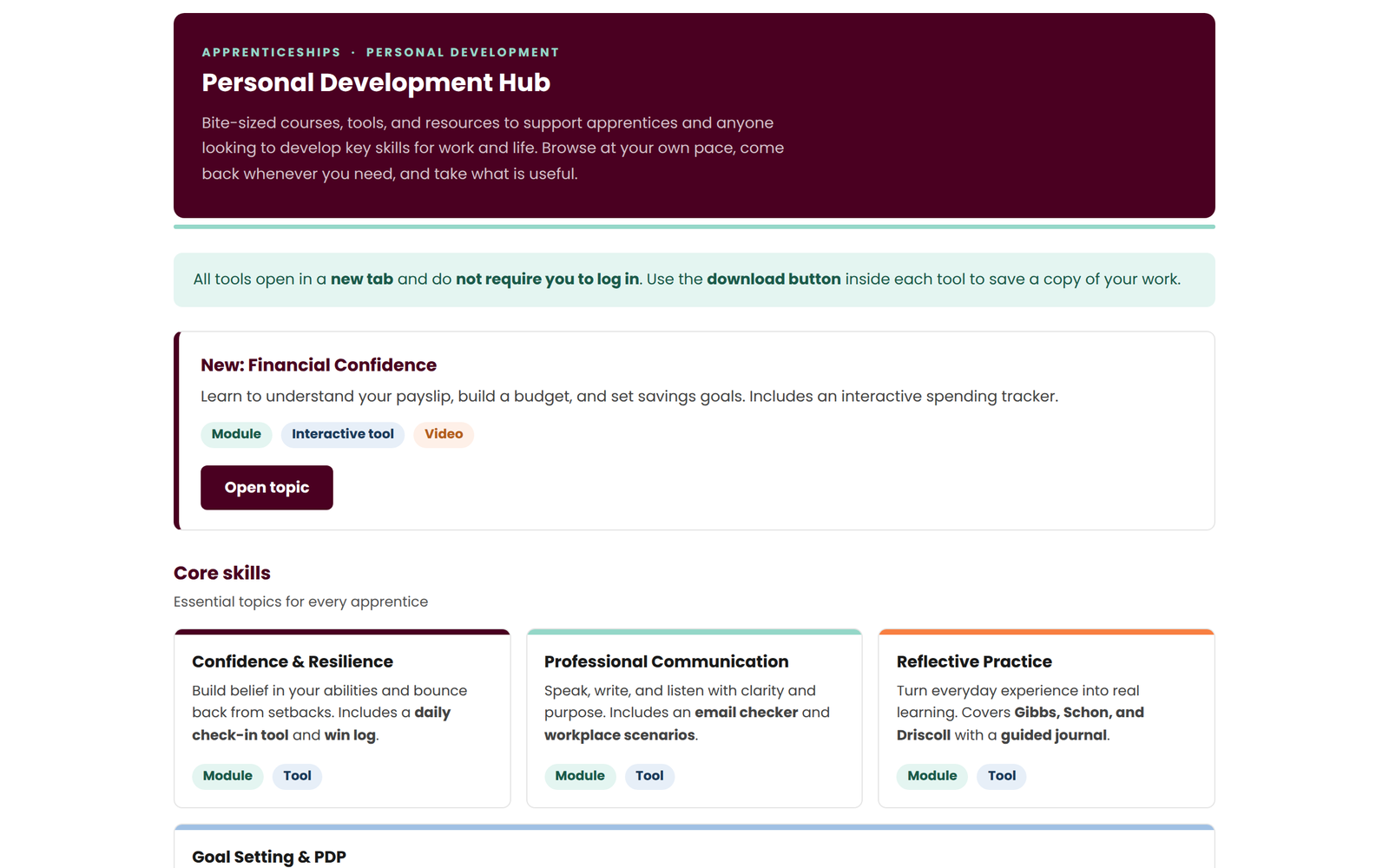
The problem. Leeds Trinity needed a personal development programme for apprentices, covering the skills that get someone through work and life but rarely get taught directly: financial confidence, confidence and resilience, professional communication, reflective practice, and goal setting and PDPs. It had to work online, for learners going through it in their own time rather than in a taught session.
What we did. We designed the suite as a set of branded, interactive modules and guides, one per topic, each paired with a custom tool the learner could actually use rather than just read about. A Financial Confidence Tracker with a live budget, spending and payslip breakdown. A Reflection Journal built around the Gibbs cycle. A Confidence and Resilience check-in with a daily log. Each tool was built as a single self-contained piece, accessible by default, written in plain English, and scaffolded so learners built confidence on a topic and then applied it on their own.
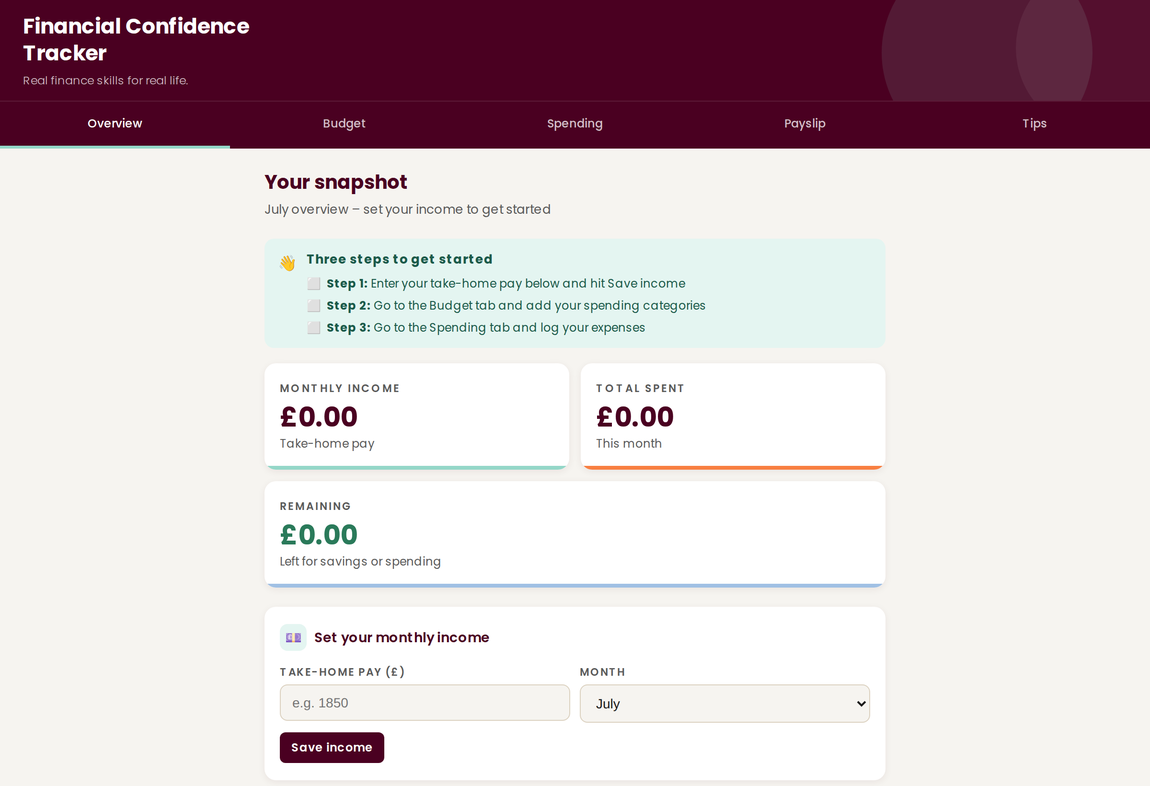
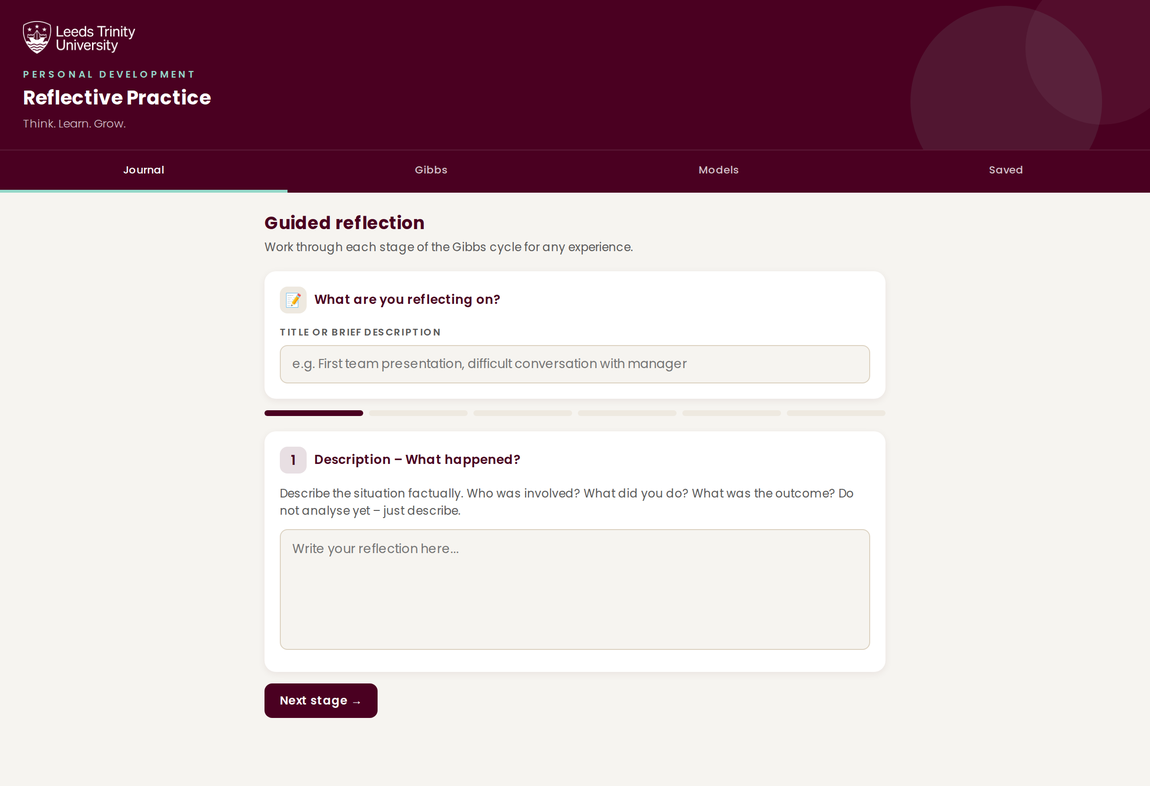
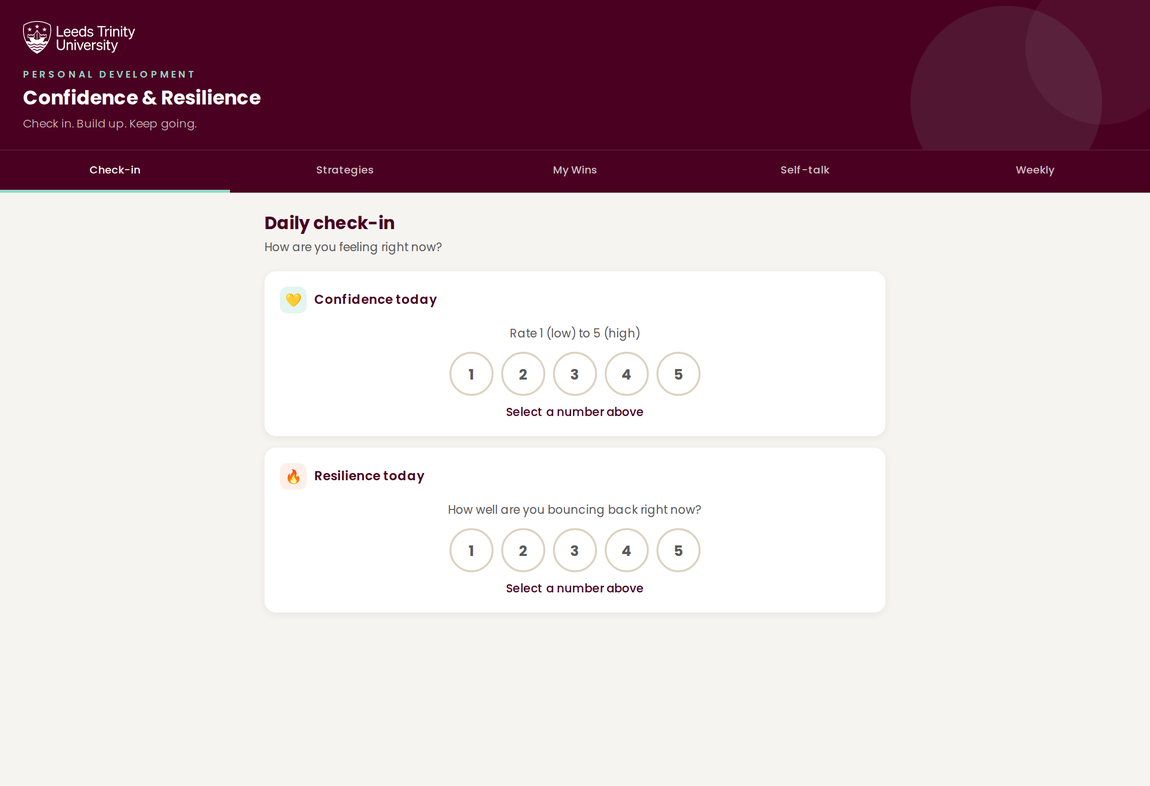
The suite grew well beyond the basics, into taught modules on professional communication, working globally, ethical decision making, and equality, diversity and inclusion. Same plain-English writing, same accessible build, each one a proper piece of learning rather than a slide dump.
What it delivered. The suite was designed to do more than get apprentices through a course. Every topic leaves the learner with a working tool rather than a certificate, so the budget tracker, the reflection journal and the check-in are all still usable once the formal learning has finished. The hub stays open, free and without a login, so nothing expires when the programme does.
Got a course, a module, or a whole programme? Let’s build it properly.
Tell us what your learners are struggling with, and we’ll tell you honestly what would help.
Start a conversation